The morning after Eleanor tried on her wedding dress, the joy she felt in the bridal suite did not follow her home in the same gentle way. It lingered in fragments—like sunlight caught in glass—beautiful but fragile against the sharper edges of reality waiting for her in her daughter’s voice. Sarah had always been practical, grounded, protective in a way that came from fear more than cruelty. But when she saw the dress, she didn’t smile the way Eleanor expected. Instead, she folded her arms and said quietly, almost disapprovingly, that spending so much money on a wedding at her age was “unnecessary at best and foolish at worst.” The words didn’t land like anger. They landed like disappointment, which somehow hurt more. Eleanor stood in her kitchen that evening, the kettle humming in the background, thinking not about the dress itself but about what it represented to her daughter: not romance, not renewal, but risk. Sarah had watched her mother struggle through widowhood for years, watched bills tighten and life shrink into careful routines. To her, love at seventy-two looked less like a celebration and more like vulnerability disguised as hope.
Eleanor didn’t respond immediately. She had learned over decades that silence sometimes protected more than it surrendered. Instead, she looked out her window at the quiet street, where the world continued as if no one inside was questioning whether they were allowed to begin again at this stage of life. Arthur had not yet entered her home that day, but his presence already lived in it—in the second mug on the counter, in the book he had left behind last visit, in the faint memory of laughter that lingered longer than expected. She wondered if Sarah could see what she saw: that this was not about replacing anything, nor erasing what came before, but about allowing life to widen again after years of narrowing. Still, doubt has a way of settling into even the most certain hearts, and Eleanor found herself sitting longer that night, hands folded, listening to the ticking clock as if it might answer for her.
Arthur, when she finally saw him the next afternoon, noticed immediately that something had shifted. He had always been attentive in a quiet, unassuming way—never pressing, never demanding explanations. But that day he simply placed a small paper bag on her table and said he brought pastries from the bakery she liked. Then he sat down opposite her and waited. It was that waiting, more than anything else, that made her speak. She told him about Sarah’s reaction, about the concern wrapped in judgment, about the way her daughter looked at her as though she had forgotten her own limitations. Arthur listened without interruption, his hands resting calmly on the table. When she finished, he did not rush to defend himself or reassure her with easy promises. Instead, he asked gently whether she believed Sarah was afraid of losing her or afraid of watching her make a choice that might lead to disappointment. That question stayed with Eleanor longer than any opinion ever had. It reframed everything not as opposition, but as fear expressed in a language too sharp to soften.
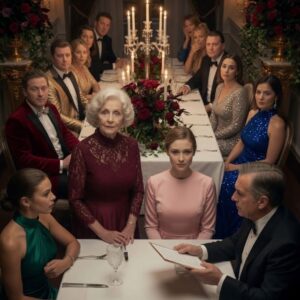
As the wedding day approached, tension did not disappear—it simply rearranged itself into quieter corners of the family dynamic. Sarah continued to help with preparations, but her movements carried restraint, as if she were participating in something she still did not fully endorse. Guests were invited in small numbers, mostly longtime friends who had known Eleanor through different seasons of her life. The venue itself was modest, chosen deliberately: a garden rather than a hall, open sky rather than chandeliers. Arthur agreed immediately when she suggested it, saying he preferred places where time felt less like a wall and more like air. Still, Eleanor noticed how Sarah lingered on details, questioning costs, calculating what could have been saved. It was not cruelty—it was conflict between love and logic, between the daughter who wanted to protect her mother and the woman who wanted to reclaim her own narrative. On the night before the wedding, Eleanor sat beside Sarah in the living room, both of them pretending to watch television while actually sitting inside a conversation neither knew how to begin.
It started slowly, as most truths do. Sarah finally admitted she was not angry about the wedding itself, but terrified of what it symbolized: that her mother might be opening her heart to loss again at an age when recovery felt harder, slower, more uncertain. She spoke about watching Eleanor grieve her father, about the years of loneliness that followed, about the fear that happiness now might simply be a prelude to another ending. Eleanor listened, and for the first time understood that her daughter’s resistance was not rejection but protection sharpened into control. When she responded, her voice was softer than Sarah expected. She told her daughter that love had never been safe, even when she was younger, even when she thought she had time to recover from its risks. The difference now, she said, was not that she feared loss less, but that she feared regret more. The regret of not allowing herself to live fully while she still could. Sarah did not respond immediately, but her eyes changed in a way that suggested understanding was beginning to replace resistance.
The morning of the wedding arrived with a stillness that felt almost sacred. Eleanor stood once again in front of the mirror, this time not alone but surrounded by movement—helpers adjusting her veil, smoothing fabric, offering quiet congratulations. Her dress fit differently now, not because it had changed, but because she had. Every lace detail felt less like decoration and more like memory stitched into fabric. When Sarah entered the room, she paused at the doorway longer than usual. There was something different in her expression—less certainty, more softness, as if she had been carrying something heavy and finally set it down. She walked toward her mother slowly, then reached out and adjusted the sleeve of the gown with careful hands. “You really do look beautiful,” she said quietly, and this time there was no hesitation in her voice. Eleanor smiled, but did not speak. Some emotions are too layered for language at the moment they are felt.
The ceremony unfolded beneath warm light filtering through trees, each moment unhurried, intentional. Arthur waited at the end of the aisle as he always had in Eleanor’s imagination of this day—not perfect, not unchanged by life, but present in a way that made everything else feel secondary. As she walked toward him, she felt something she had not expected at this age: not the rush of youth, but the steadiness of certainty earned over time. When she reached him, their hands met like something familiar returning home. Vows were spoken, not grand but honest, shaped by years lived rather than dreams imagined. And when the moment came where they were declared married, the sound of applause did not feel like celebration alone, but acceptance—of timing, of choice, of a life that refuses to stop unfolding simply because others believe it should.
Later, when the evening settled and guests drifted into conversation and music, Sarah approached her mother quietly. She did not apologize dramatically, nor retract everything she had said. Instead, she simply took Eleanor’s hand and squeezed it. “I still worry,” she admitted, “but I understand more now.” Eleanor nodded, feeling the truth of that sentence settle between them without needing resolution. Arthur joined them shortly after, standing beside Eleanor as the lights softened around them. The three of them remained like that for a moment—mother, daughter, and the man who had entered their lives not to replace anything, but to expand what remained possible. And in that quiet understanding, Eleanor realized that the wedding was never just about love renewed. It was about permission—given and received—to keep becoming, no matter the number attached to your age.