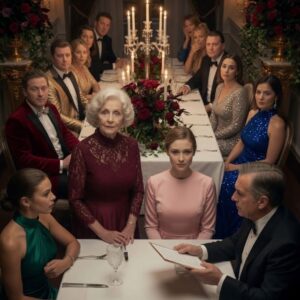
Julia Roberts has long been celebrated for her radiant smile, magnetic presence, and effortless grace. For decades she represented the image of Hollywood charm, a performer whose warmth and natural charisma made audiences feel instantly connected to the characters she portrayed. Her roles in romantic comedies and uplifting dramas cemented her reputation as one of the most beloved actresses of her generation. Yet when she stepped into the world of August: Osage County, audiences saw a completely different side of her talent, one that stripped away glamour and revealed something far more intense and emotionally raw.
The transformation surprised many people who had grown accustomed to seeing Roberts as the confident, smiling lead in lighter films. In this project, however, she stepped far outside the comfort zone that had defined much of her career. Instead of elegance and polished beauty, the character she portrayed demanded vulnerability, anger, grief, and emotional exhaustion. It required her to abandon the familiar Hollywood image and fully inhabit the messy reality of a woman whose life is falling apart under the pressure of family tragedy.
Filming took place in Bartlesville, Oklahoma, a quiet town whose calm landscapes contrasted sharply with the emotional turbulence unfolding within the story. For Roberts, the setting played an important role in shaping the authenticity of the film. Being away from the typical Hollywood environment helped create a more grounded atmosphere. The small-town surroundings added realism to the story of a fractured family forced to confront long-buried conflicts.
At the center of the film is Barbara Weston, the eldest daughter of a deeply troubled family. When her father disappears under tragic circumstances, Barbara returns to her childhood home to face the painful reality of her family’s past and present. What begins as a moment of mourning quickly evolves into an explosive confrontation between siblings, spouses, and parents whose unresolved tensions have been simmering for years.
Roberts approached the role with a level of emotional commitment that surprised even longtime fans. To embody Barbara fully, she intentionally shed the visual trademarks that had made her famous. Gone were the polished hairstyles and glamorous wardrobes audiences had come to expect. Instead, she appeared in loose jeans, simple layered clothing, and unstyled brunette hair that reflected the exhaustion of a woman overwhelmed by life.
This visual simplicity was not accidental. It was part of a deliberate effort to allow the character’s emotional truth to take center stage. Barbara is not meant to be admired for elegance or charm. She is meant to be understood as a complex human being struggling with anger, disappointment, and grief. The understated wardrobe helped ground the performance in realism, making the character feel authentic and relatable.
The story itself explores themes that are both universal and deeply uncomfortable. Families often carry hidden wounds beneath the surface of everyday life. Resentments, misunderstandings, and emotional scars accumulate over the years, sometimes remaining unspoken until a crisis forces them into the open. In the Weston family, that crisis arrives with devastating force.
When Barbara returns home, she finds herself confronting not only the disappearance of her father but also the complicated relationships that define her family. Her mother, Violet Weston, is battling addiction and illness, yet she remains sharp-tongued and confrontational. Years of unresolved conflict between mother and daughter erupt almost immediately, turning the family gathering into a battlefield of painful truths.
For Roberts, the relationship between Barbara and her mother forms the emotional core of the story. Their interactions are filled with bitterness, resentment, and moments of brutal honesty. The intensity of these exchanges requires an extraordinary level of emotional precision from both performers, creating scenes that feel almost uncomfortably real.
One of the most powerful sequences in the film takes place near a lakeside dock. In this moment, Barbara must confront the reality of her father’s fate. Standing beside local authorities, she is asked to identify a body recovered from the water. The quiet gravity of the scene reflects the devastating weight of loss.
Acting opposite Ewan McGregor, who plays her estranged husband Bill Fordham, Roberts delivers one of the most restrained performances of her career. Rather than dramatic outbursts or exaggerated emotion, the scene relies on subtle gestures and expressions. Her eyes fill with tears, her voice falters, and the weight of realization slowly settles across her face.
The power of the moment lies in its quietness. Grief is not always loud or theatrical. Sometimes it appears as a silent collapse of emotional strength, a moment when a person realizes that life will never return to what it once was. Roberts captures that fragile moment with remarkable sensitivity.
Ewan McGregor’s presence adds balance to the scene. As Bill, he represents a calm and supportive figure, even though his marriage to Barbara is already strained. His steady demeanor contrasts with Barbara’s emotional turmoil, creating a dynamic that allows the scene to unfold naturally without overwhelming dialogue.
Despite the darkness of the story, life on the film set was not always heavy or somber. Between emotionally demanding scenes, the cast often found moments of humor and camaraderie that helped maintain balance during production. Roberts, known for her easygoing personality, frequently lightened the atmosphere with laughter and playful conversations.
One of her closest connections on set was with Julianne Nicholson, who portrays Barbara’s sister Ivy. Nicholson’s character is quieter and more reserved than Barbara, yet she carries her own deep emotional burdens within the family dynamic. Their characters share moments of tenderness and understanding amid the chaos surrounding them.
Off camera, the two actresses developed a warm friendship that helped ease the emotional intensity required by the story. Nicholson’s understated style mirrored the film’s overall realism. Her character appears in simple clothing and natural hairstyles, reinforcing the grounded tone of the production.
The ensemble cast as a whole contributed to the film’s powerful emotional impact. Each actor brought depth to their role, creating a believable portrait of a family struggling with grief, addiction, betrayal, and unresolved resentment. The interactions between characters often feel less like scripted dialogue and more like real conversations between relatives who know each other too well.
This authenticity stems in part from the film’s origins as a stage play written by Tracy Letts. The play received widespread acclaim for its sharp dialogue and complex characters, earning a Pulitzer Prize and numerous awards. When adapting the story for the screen, the filmmakers sought to preserve the emotional intensity that had made the stage production so compelling.
For Roberts, participating in such a deeply character-driven project represented a meaningful shift in her career. After years of starring in commercially successful films, she embraced a role that demanded vulnerability rather than star power. The decision allowed audiences to see her abilities in a new light.
Her portrayal of Barbara Weston reveals a woman who is not easily categorized as hero or villain. Barbara can be protective, sarcastic, loving, and cruel, sometimes all within the same conversation. Like many people dealing with unresolved pain, she lashes out at those around her even while trying to hold the family together.
The film does not offer easy resolutions or comforting conclusions. Instead, it presents a portrait of a family confronting difficult truths about themselves and one another. The characters are forced to acknowledge how past choices continue to shape their present lives.
Throughout the story, moments of quiet reflection alternate with explosive confrontations. The Weston household becomes a stage where long-hidden resentments finally emerge. Conversations that might once have been avoided now erupt with painful honesty.
Barbara stands at the center of these conflicts, trying to navigate her own emotional turmoil while responding to the needs and demands of those around her. Her struggle reflects a universal experience: the complicated responsibility of caring for family members while also protecting one’s own well-being.
Roberts brings remarkable authenticity to this struggle. She portrays Barbara as a woman who is strong yet deeply wounded, determined yet vulnerable. Her performance reminds viewers that strength does not always appear as calm confidence. Sometimes it appears as the stubborn determination to keep moving forward despite overwhelming circumstances.
By the end of the film, the audience is left with a lingering sense of reflection. The story of the Weston family does not resolve neatly, because real families rarely do. Instead, it offers a glimpse into the messy reality of human relationships, where love and resentment often exist side by side.
Julia Roberts’ transformation for this role stands as a testament to her versatility as an actress. By abandoning glamour and embracing emotional honesty, she delivered a performance that resonated deeply with audiences and critics alike.
The film remains a powerful exploration of family dynamics, grief, and the enduring impact of unresolved pain. Through her portrayal of Barbara Weston, Roberts demonstrated that true artistry often lies not in perfection or beauty, but in the willingness to reveal the complicated truths of human experience.